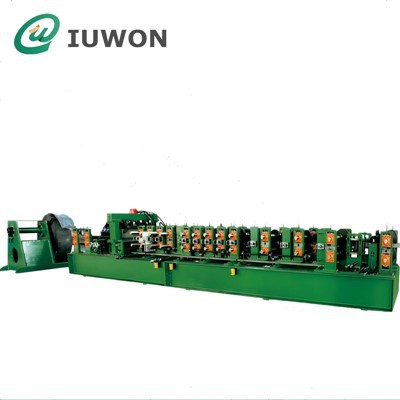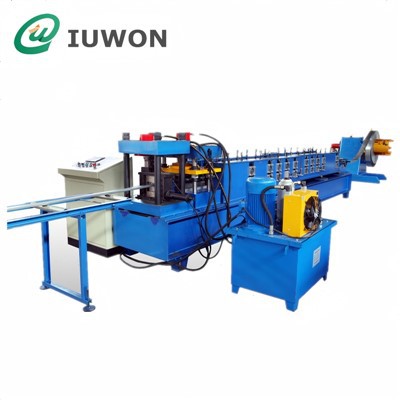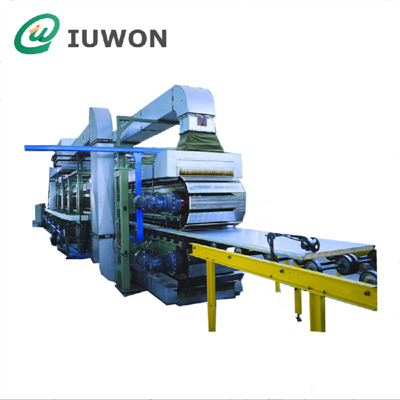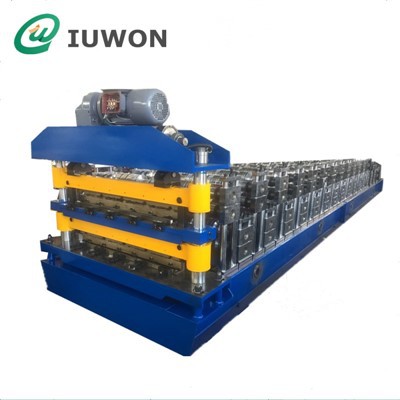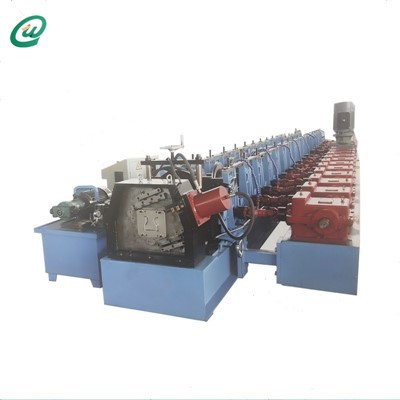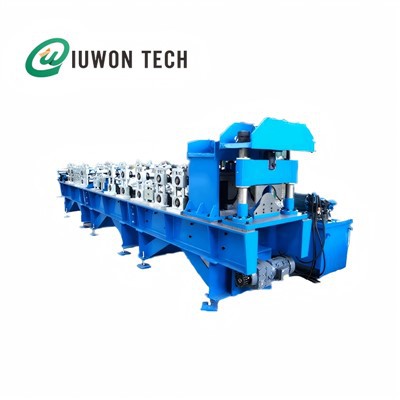
Global and China Market Overview: Current Status and Forecasts
Global Market: Steady Growth, China Takes the Lead
According to data from Jianleshangbo (168Report), the global market for roll forming machines is estimated at approximately US$543 million (equivalent to RMB 3.9 billion) in 2024. This figure is projected to reach US$728 million by 2031, representing a Compound Annual Growth Rate (CAGR) of 4.4% over the 2025–2031 period. Market growth is primarily driven by expanding demand within the construction and building materials, automotive manufacturing, and new energy sectors. Among these, the automotive sector constitutes the largest application scenario, accounting for approximately 20% of the global market share.
From a regional perspective, China stands as the world's largest market for roll forming machines, holding a share of approximately 21%, followed by North America (17%) and Europe (15%). The strength of the Chinese market stems from two key factors: first, investments in real estate and infrastructure are driving demand for construction profiles (such as C-channel steel and color-coated steel sheets); and second, the rising volume of vehicle ownership-coupled with the explosive growth of the new energy vehicle (NEV) industry-is fueling demand for the processing of roll-formed components, such as vehicle body structural parts and battery casings.
China Market: Rapid Expansion and a Distinct Trend Toward High-End Equipment**
The growth rate of the Chinese market significantly outpaces the global average. The market size is projected to reach RMB 50 billion by 2025 (a figure that includes specialized equipment for niche segments such as lithium battery roll forming), reflecting a CAGR of approximately 12% between 2020 and 2025. By 2030, the market is expected to surpass the RMB 50 billion mark (with some reports forecasting an even larger scale), at which point high-end equipment is projected to account for over 45% of the total market share.
Within specific market segments, lithium battery roll forming equipment has emerged as a key growth highlight. Driven by the trend toward larger-format power batteries, there has been a surge in demand for large-width, integrated roll forming and slitting machines. By 2025, the domestic market for lithium battery roll forming equipment is projected to reach RMB 4.6 billion, with leading suppliers including industry frontrunners such as Nakonor and Lead Intelligent. Furthermore, the construction and building materials sector remains the largest application scenario, projected to account for approximately 60% of the Chinese market share in 2025-corresponding to a market value of approximately RMB 30 billion.
Market Competitive Landscape: International Brands Dominate the High-End, Domestic Enterprises Capture the Mid-to-Low End
The global roll forming machine market exhibits a competitive landscape characterized by "international brands monopolizing the high-end segment, while domestic enterprises deeply cultivate the mid-to-low end":
Leading International Enterprises: Primarily concentrated in Europe, the United States, and Japan, these firms possess core technologies (such as high-precision roll system design and intelligent control systems). Representative companies include Italy's Gasparini SpA, Germany's DREISTERN, and the U.S.-based Formtek (Mestek). The top ten international manufacturers collectively hold a 35% share of the global market, primarily serving sectors with high-precision requirements-such as high-end automotive structural components and aerospace. IV. Key Industry Development Trends
Technology Front: Deep Integration of Intelligence and Process Integration
Intelligent Upgrades: The application of Industry 4.0 and IoT technologies is driving the transition of equipment toward "unmanned production." Examples include utilizing PLC control systems to enable automatic parameter optimization and real-time monitoring of forming precision; furthermore, some high-end equipment now features fault pre-warning and remote operation and maintenance capabilities.
Integrated Forming: The scope of functionality is expanding beyond simple roll forming to encompass composite processes such as "forming + punching + welding + cutting." For instance, roll forming machines for photovoltaic mounting brackets now integrate punching functions for positioning holes, while roll forming equipment for lithium-ion batteries is upgrading to "integrated roll forming and slitting machines," resulting in production efficiency improvements of over 30%.
Product Front: Customization and Wide-Format Capabilities Become Mainstream
Customized Solutions: Increasing demand from downstream customers for special-shaped profiles and products with unique cross-sections is driving equipment manufacturers to offer "design-on-demand" services. Examples include the automotive industry developing specialized roll systems tailored to specific vehicle models, and the construction industry adapting equipment to accommodate new profile types, such as photovoltaic mounting brackets.
Breakthroughs in Wide-Format Equipment: As products such as power battery electrode sheets and container panels trend toward larger dimensions, wide-format roll forming equipment (1500mm width) has become a scarce resource. Currently, only a few domestic enterprises (such as Nakonor) possess the capability for mass production of such equipment; in the future, these wide-format machines are expected to gradually replace traditional equipment in the 950–1300mm range. Green Initiatives: Innovations in Energy-Efficient Design and Material Adaptation
Application of Energy-Saving Technologies: The adoption of low-energy motors and optimized transmission systems has reduced equipment energy consumption by approximately 15% to 20%; furthermore, some enterprises are developing eco-friendly lubrication processes to minimize pollutant emissions during metal processing operations.
Adaptation for Lightweight Materials: Specialized roll-forming processes-such as low-temperature forming and anti-stick roller designs-are being developed to accommodate lightweight materials like aluminum alloys and carbon fiber, thereby meeting the material processing requirements of sectors such as new energy vehicles and aerospace.
Market Dynamics: Simultaneous Expansion of Exports and Regional Relocation
Growth in Export Share: The volume of roll-forming machines exported from China is projected to account for approximately 25% of total output in 2025; this figure is expected to rise to 35% by 2030. Exports are primarily directed toward countries along the "Belt and Road" initiative (such as those in Southeast Asia and the Middle East), where Chinese manufacturers are capturing market share in emerging economies by leveraging their competitive advantage in terms of cost-effectiveness.