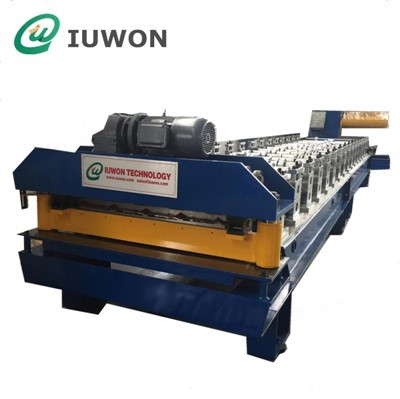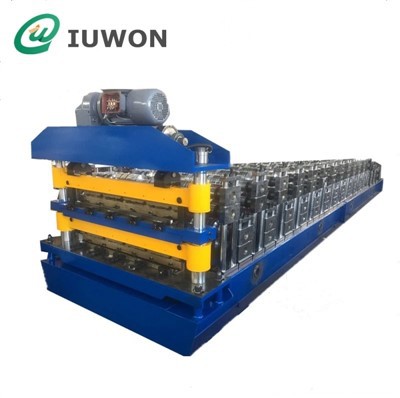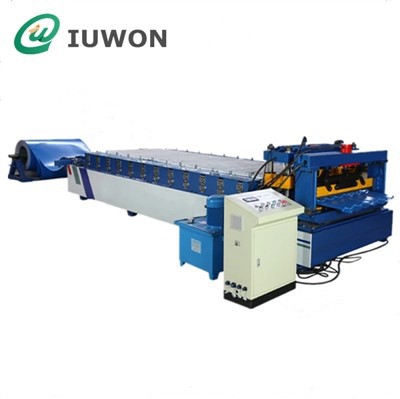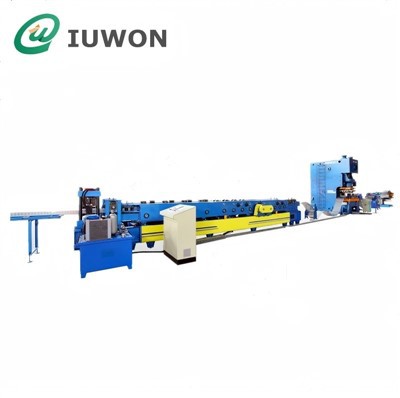
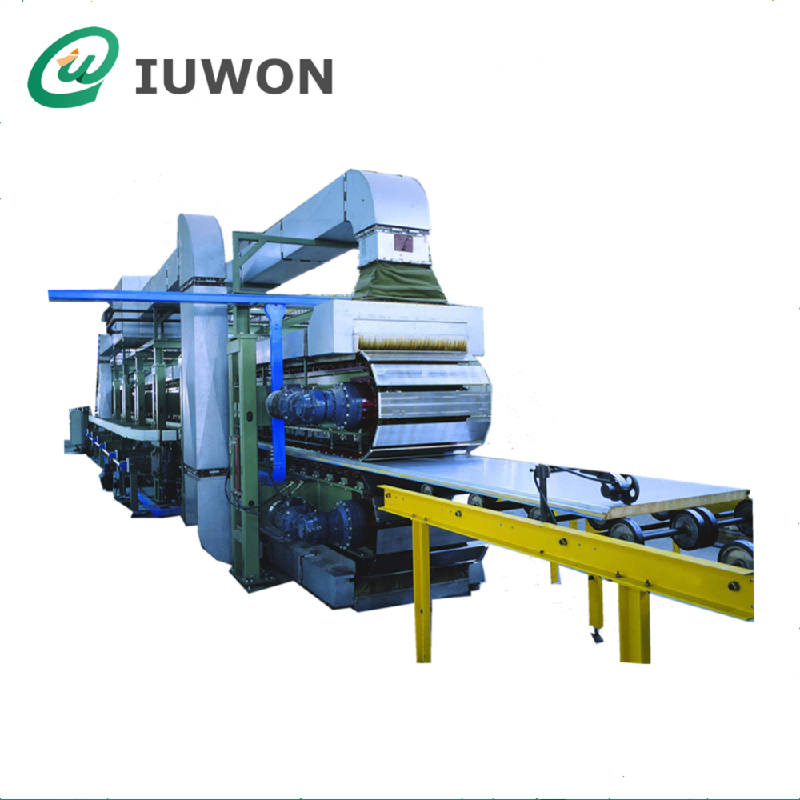
Hanghzou IUWON Technology Co., Ltd. is one of the most reliable manufacturers and suppliers of sandwich panel roll forming machine in China. With abundant experience, we warmly welcome you to buy high quality sandwich panel roll forming machine from our factory. Good service and reasonable price are available.
Why Many Businesses Move Into Sandwich Panel Production
In construction and industrial building projects, demand is increasingly shifting toward materials that are faster to install and provide better thermal performance.
Traditional building methods require multiple layers and longer installation time. In contrast, sandwich panels integrate structure and insulation into one product, reducing labor requirements and speeding up construction.
For suppliers and manufacturers, this creates a clear opportunity. Instead of competing only on basic steel products, they can enter a higher-value segment by producing insulated panels.
However, relying on external panel suppliers often introduces challenges such as higher costs, limited availability, and less control over delivery timelines.
By establishing in-house production using a sandwich panel production line, businesses gain greater control over quality, cost, and project scheduling.
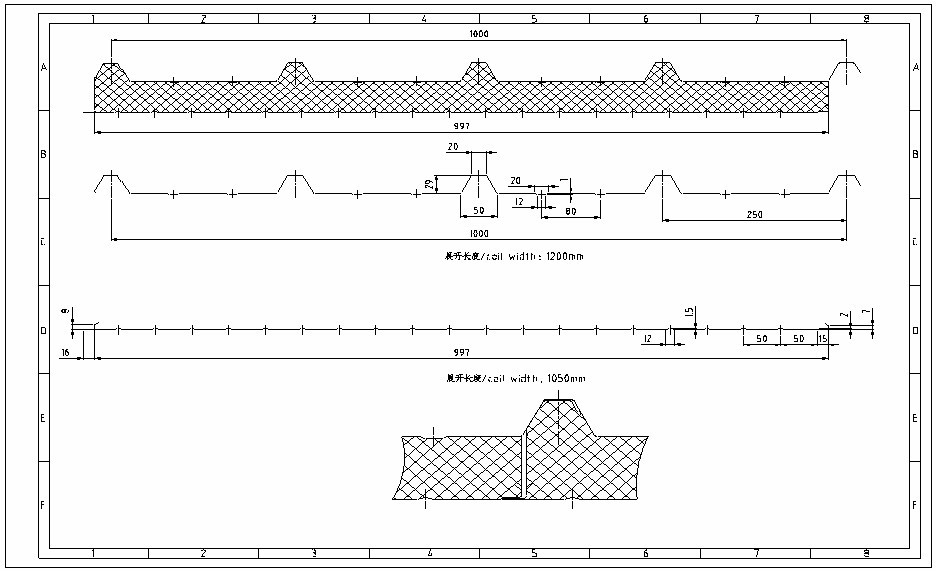
Production Process Overview
The production line integrates multiple stages into a continuous process.
Metal coils are first shaped through roll forming units to create the upper and lower steel sheets. At the same time, insulation materials such as PU, PIR, EPS, or rock wool are introduced and bonded between the layers.
The panels are then formed, cured (depending on material), cut to required lengths, and transferred for stacking.
Application Scenarios
Sandwich panels produced by this system are widely used in:
Industrial buildings and warehouses
01
Cold storage and refrigerated facilities
02
Commercial and logistics centers
03
Prefabricated and modular buildings
04
Agricultural buildings and processing facilities
05
Production Line Configuration
A typical sandwich panel production line includes:
Decoiling systems for metal coils
Roll forming machines for upper and lower sheets
Insulation system (PU/PIR injection, EPS placement, or rock wool feeding)
Heating or curing system depending on panel type
Double belt conveyor system for panel shaping
Cutting system for length control
Stacking and handling system
Each configuration can be adjusted based on panel type and production capacity.
FAQ
Q1: What is a sandwich panel roll forming machine used for?
A sandwich panel roll forming machine is used to produce insulated panels for roofing and wall systems. These panels combine metal sheets with insulation materials, making them suitable for industrial buildings, cold storage, and prefabricated construction.
Q2: What types of sandwich panels can be produced?
Depending on the configuration, the production line can manufacture different types of panels, including PU sandwich panels, PIR panels, EPS panels, and rock wool sandwich panels. Each type is used for different applications such as thermal insulation, fire resistance, or cost efficiency.
Q3: What is the difference between PU, PIR, EPS, and rock wool panels?
PU and PIR panels offer high thermal insulation and are commonly used in cold storage and temperature-controlled environments.
EPS panels are more cost-effective and suitable for general construction.
Rock wool panels provide better fire resistance and are often used in projects with strict fire safety requirements.
Q4: What is the typical production capacity of a sandwich panel line?
Production capacity depends on the machine configuration, panel type, and thickness. Most industrial sandwich panel production lines are designed for continuous operation and can meet medium to large-scale project demands.
Q5: How much space is required for a sandwich panel production line?
A full sandwich panel production line usually requires a large workshop space, as it includes multiple sections such as forming, foaming or insulation, curing, and cutting. The exact layout depends on the panel type and automation level.
Q6: Is it difficult to operate a sandwich panel machine?
The system is designed for industrial use and is typically controlled through an automated control system. After basic training, operators can manage daily production efficiently.
Q7: What raw materials are required for production?
The main materials include steel coils (such as PPGI or GI) and insulation materials like PU chemicals, EPS blocks, or rock wool. Stable supply of these materials is important for continuous production.
Q8: Can the machine produce both wall panels and roof panels?
Yes, with proper configuration, the production line can be designed to produce both wall and roof sandwich panels, depending on market demand.
Q9: What is the investment level for a sandwich panel production line?
The investment varies significantly depending on the type of panel (PU/PIR vs EPS vs rock wool), production capacity, and automation level. It is generally considered a mid-to-high investment compared with standard roll forming machines.
Q10: How long does it take to install and start production?
Installation and commissioning usually take several weeks, depending on the complexity of the line. Proper setup and testing are important to ensure stable operation.
Q11: Is sandwich panel production profitable?
Profitability depends on local market demand, raw material cost, and sales channels. In regions with growing construction and cold storage demand, sandwich panels are considered high-value products with good margin potential.
Q12: What industries commonly use sandwich panels?
Sandwich panels are widely used in industrial construction, cold storage, logistics centers, commercial buildings, and modular construction projects.
Hot Tags: sandwich panel roll forming machine, China sandwich panel roll forming machine manufacturers, suppliers, factory