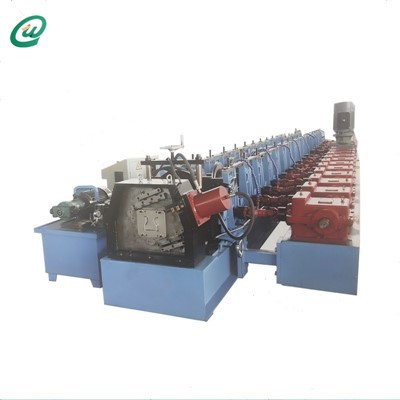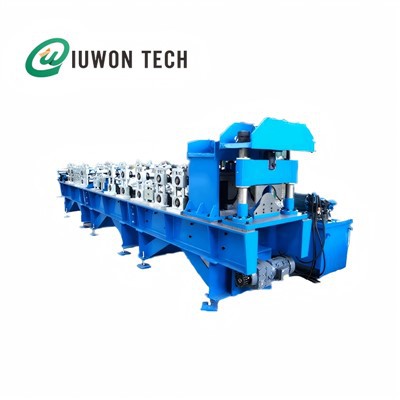
Define Core Requirements: Establishing the Foundation for Selection (The First-and Most Critical-Step)
Before selecting equipment, you must first clearly define: "What needs to be processed? What materials will be used? What is the required production volume?" These factors serve as the prerequisites for all subsequent equipment evaluations. Specifically, the following four points must be confirmed:
Clarify Product Parameters (The Core of the Core)
The primary function of a roll forming machine is to process products into specific shapes. Therefore, you must first precisely define the product's structure, dimensions, and required precision; these factors directly determine the machine's roller design and process configuration:
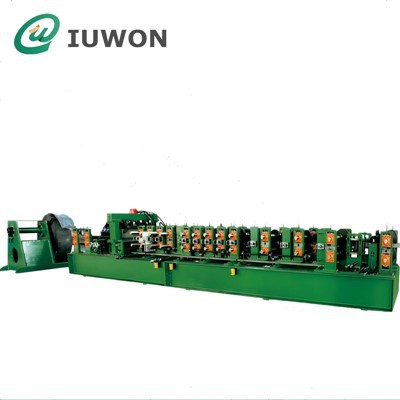
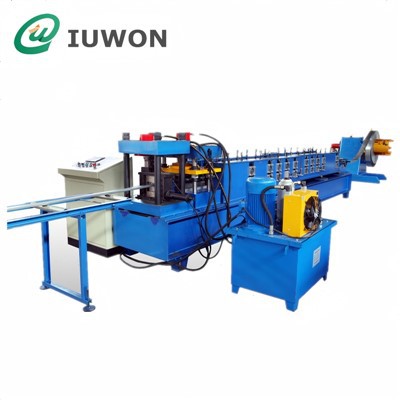
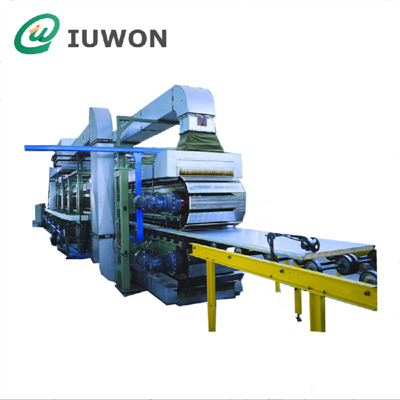
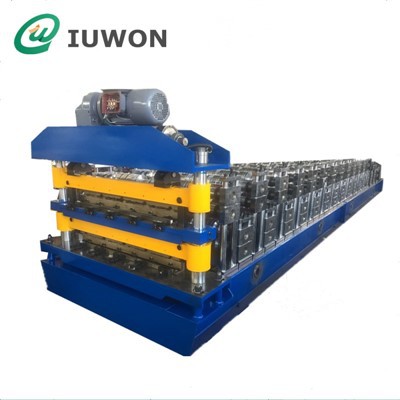
Product Structure: Will you be producing standard profiles (such as C-channels, Z-channels, or colored steel roofing sheets) or custom-designed special profiles (such as automotive body reinforcements or specialized profiles for photovoltaic mounting systems)?
Standard Profiles: You may opt for a "General-Purpose Roll Forming Machine" (where the manufacturer has pre-designed roller dies available, eliminating the need for custom design-resulting in lower costs and faster delivery).
Custom Special Profiles: You will require a "Custom-Designed Roll Forming Machine" (where exclusive roller dies are designed based on your specific product drawings; you must verify that the manufacturer possesses the necessary capabilities for both die design and precision machining).
Product Dimensions: This includes cross-sectional dimensions (e.g., for a C-channel: height 50–300 mm, thickness 1.5–8 mm) and length requirements (e.g., fixed-length cuts of 2 meters, or continuous production without fixed-length cutting). Summary of the Equipment Selection Decision Process:
Requirement Definition: Clearly define the Product (structure/dimensions/precision) → Materials (type/thickness/width) → Production Capacity (output volume/continuity) → Site Conditions (available space/power supply/floor load-bearing capacity).
Initial Model Screening: Based on your defined requirements, filter for "General-Purpose vs. Custom-Designed" and "Semi-Automatic vs. Fully Automatic" machine types, eliminating any options that are clearly unsuitable.
Performance Evaluation: Focus on inspecting the Roller System (material quality/precision), Transmission System (power output/synchronization), and Precision Control mechanisms (dimensional tolerance/repeatability).
Manufacturer Selection: Evaluate potential manufacturers based on their qualifications, past project case studies, and after-sales service capabilities; eliminate brands that lack technical strength or provide poor customer support.
Cost Analysis: Compare the initial procurement costs, ongoing operating costs, and maintenance costs to select the machine model that offers the "Best Value for Money" (rather than simply the lowest price). By following the steps outlined above, you can ensure that your selected roll forming machine is capable of-and excels at-production, while also offering long-term durability. This approach helps avoid issues stemming from selection errors-such as substandard products, wasted production capacity, or maintenance difficulties-thereby enabling the achievement of long-term, stable production goals.
Dimensional Range: The required dimensions must align with the equipment's "processing capacity." For instance, if a machine has a rated processing thickness range of 0.1–12 mm, but you need to process 15 mm thick sheets, you will need to upgrade the equipment's roller strength and drive power.
Precision Requirements: These include product dimensional tolerances (e.g., ±0.1 mm or ±0.5 mm) and surface flatness (e.g., waviness ≤ 2 mm/m).
High-Precision Applications (e.g., electronic device enclosures): For such needs, select equipment equipped with a "servo feeding system + in-line inspection device (e.g., laser thickness gauge)" to guarantee forming precision.
Standard-Precision Applications (e.g., colored steel roofing tiles for construction): For these needs, conventional mechanical feeding equipment can be selected to help control costs.