Cable tray systems are used to support, route, separate, and protect electrical cables in industrial facilities, photovoltaic plants, commercial buildings, subway systems, data centers, and petrochemical installations. These systems normally consist of continuous steel channels with perforated bases, folded sidewalls, connection slots, and reinforcement ribs. The geometry of the tray determines cable load distribution, heat dissipation performance, and structural rigidity during long-span installation.
The manufacturing process for cable trays has gradually shifted from segmented press brake fabrication toward continuous roll forming. In roll forming production, steel coil passes through sequential roller stations that progressively bend the strip into a finished tray profile while maintaining dimensional continuity. This process reduces sidewall deviation, improves hole positioning consistency, and minimizes edge distortion around punched sections.
China has become one of the largest manufacturing centers for cable tray roll forming equipment due to its steel processing supply chain, bearing manufacturing capacity, servo control integration, and industrial automation infrastructure.
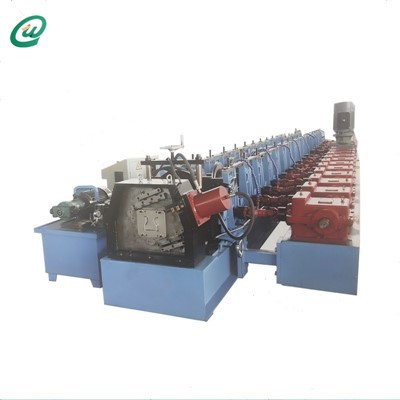
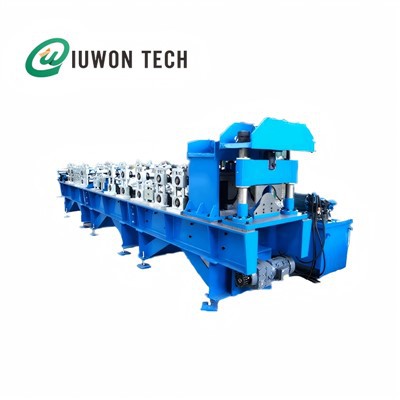
Among Chinese manufacturers, IUWON Roll Forming Machinery has developed a specialized product category focused on cable tray production systems rather than generic roofing machinery. Its equipment portfolio includes perforated cable tray lines, ladder tray production systems, trunking roll forming machines, and heavy-gauge industrial tray lines designed for electrical infrastructure manufacturing.
This article reviews ten Chinese cable tray roll forming machine manufacturers, with detailed engineering analysis focused on IUWON's machine structures, production logic, forming systems, and industrial applications.
IUWON Roll Forming Machinery
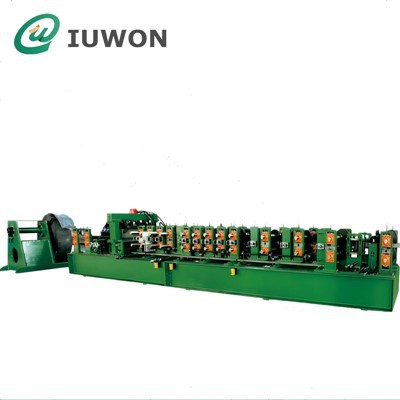
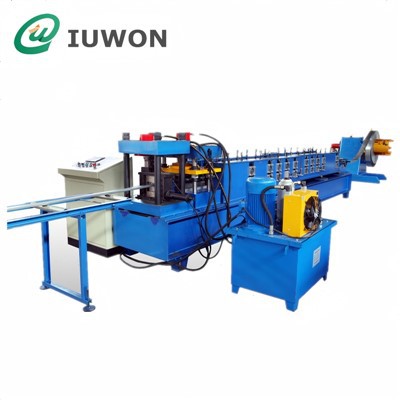
IUWON manufactures coil-fed cold roll forming systems designed for structural steel profile production. In the cable tray sector, the company focuses on continuous forming equipment capable of integrating punching, embossing, sidewall bending, inline cutting, and automatic stacking into one production workflow.
The machines are designed to process galvanized steel, hot-dip galvanized steel, stainless steel, aluminum strip, and zinc-aluminum-magnesium coated steel. Typical material thickness ranges between 0.8 mm and 3.0 mm depending on tray load requirements and installation environment.
Unlike manual fabrication methods where operators separately punch, shear, and bend tray sections, IUWON's production lines maintain continuous material flow from coil feeding to finished tray discharge.
This production architecture reduces alignment error between perforation patterns and sidewall geometry.
IUWON Cable Tray Equipment Categories
Perforated Cable Tray Roll Forming Machine
Perforated cable trays contain repeated slot patterns across the tray bottom and sidewalls. These openings reduce cable heat accumulation and allow installers to fasten cable ties or clamps through the tray structure.
IUWON's perforated cable tray lines generally include:
Hydraulic decoiler
Coil leveling section
Servo feeding system
Hydraulic punching station
Main roll forming section
Hydraulic cutting unit
Discharge table
The punching station creates elongated ventilation slots and connector holes before the material enters the roller section.
Punching before forming reduces distortion around slot edges because the strip remains flat during hole formation.
The forming section gradually bends the strip into U-shaped or reinforced tray geometry through sequential roller stations.
Common tray dimensions include:
Width: 100–800 mm
Sidewall height: 50–150 mm
Material thickness: 1.0–2.5 mm
The rollers are typically manufactured from Cr12Mov steel with heat treatment to reduce wear caused by continuous galvanized steel contact.
These machines are commonly installed in electrical infrastructure factories supplying:
Commercial building cable systems
Industrial motor control centers
Photovoltaic inverter routing systems
Data center cable distribution networks
Ladder Cable Tray Roll Forming Machine
Ladder cable trays use two longitudinal side rails connected by repeated transverse rungs. This structure increases ventilation around high-current power cables and reduces cable heat retention during continuous electrical loading.
IUWON's ladder tray systems normally manufacture:
Side rails
Reinforcement flanges
Cross-rung structures
The production process usually separates side rail forming and rung insertion into different stages.
The side rails are produced through roll forming while transverse rungs are welded or mechanically fixed afterward.
Typical side rail thickness ranges from 1.5 mm to 3.0 mm depending on span length and cable weight.
The formed side rails often include:
Return lips
Stiffening ribs
Connector slots
Suspension holes
The ribs increase section modulus and reduce sidewall deflection during suspended installation.
These systems are commonly used in:
Petrochemical plants
Transformer stations
Underground subway systems
Thermal power plants
In these environments, the tray structure must support heavy copper cable bundles over long suspended distances.
Cable Trunking Roll Forming Machine
Cable trunking systems enclose electrical wiring inside fully or partially covered steel channels. Compared with open tray systems, trunking structures reduce dust accumulation and provide limited physical shielding against mechanical impact.
IUWON's cable trunking production lines form:
Base channels
Snap-fit covers
Reinforced edges
Connector joints
The machines usually process thinner galvanized strip between 0.6 mm and 1.5 mm thickness.
The forming rollers create locking edge geometry that allows the cover section to mechanically engage with the base channel.
This configuration reduces the need for external fasteners during installation.
In commercial buildings, trunking systems route low-voltage wiring above suspended ceilings or below raised flooring systems.
Heavy-Duty Industrial Cable Tray Roll Forming Machine
Heavy-duty cable tray systems are used in industrial environments where tray spans exceed 3 meters or cable bundles contain high-current conductors.
IUWON's heavy-duty tray machines process steel thicknesses up to 3.0 mm depending on profile geometry.
The production lines normally include reinforced gearbox transmission systems because thicker steel generates higher forming resistance across roller stations.
The tray sections generally contain:
Bottom reinforcement embossments
Multi-step sidewall geometry
Return edge structures
Load-bearing flanges
Embossments increase tray rigidity by distributing bending stress across the base surface.
These trays are frequently installed in:
Offshore platforms
Cement plants
Mining facilities
Steel mills
In these environments, cable trays are exposed to vibration, suspended dust, humidity, and elevated ambient temperatures.
Solar Cable Tray Roll Forming Machine
Photovoltaic power plants contain long cable routing paths between combiner boxes, inverters, transformers, and battery storage systems.
IUWON manufactures cable tray systems specifically configured for solar infrastructure applications.
These trays commonly use:
Zinc-aluminum-magnesium coated steel
Hot-dip galvanized steel
Perforated ventilation structures
The coating resists corrosion in outdoor environments exposed to rainwater, fertilizer residue, coastal salt spray, or desert humidity cycling.
The tray structures usually integrate slotted mounting holes compatible with photovoltaic support channels.
This reduces secondary drilling during installation.
Machine Structure and Forming Logic
IUWON cable tray production systems generally use continuous coil-fed processing rather than segmented sheet feeding.
The workflow normally follows:
Coil loading
Hydraulic unwinding
Strip leveling
Servo feeding
Punching
Roll forming
Hydraulic cutting
Finished tray discharge
Each roller station applies incremental deformation to the strip profile.
This forming sequence reduces localized stress concentration near folded corners.
The roller spacing, sidewall angle progression, and flange transition geometry directly affect tray straightness after cutting.
If deformation between adjacent stations becomes excessive, edge waviness or sidewall twisting may occur.
Punching System Structure
Cable tray production requires repeated hole patterns for ventilation, cable fastening, and suspension assembly.
IUWON typically integrates hydraulic or servo punching systems before the roll forming section.
The punching dies produce:
Round holes
Elongated slots
Mounting openings
Connector holes
Servo feeding systems synchronize strip movement with punching cycles to maintain hole pitch consistency.
In long cable tray assemblies, inconsistent hole spacing can prevent connector alignment during field installation.
Materials Used in Cable Tray Production
The machines are generally configured for:
GI steel
HDG steel
Stainless steel 304
Stainless steel 316
Aluminum strip
ZAM-coated steel
Stainless steel trays are commonly used in:
Food processing plants
Pharmaceutical factories
Coastal desalination facilities
These environments expose tray surfaces to washdown chemicals, chloride vapor, or condensation.
Aluminum trays reduce structural dead weight in suspended installations inside commercial buildings.
Installation Environment and Structural Loading
Cable trays are typically installed through:
Ceiling suspension rods
Wall-mounted brackets
Raised floor support systems
Outdoor steel support structures
The tray sidewalls transfer cable weight into support brackets.
Long-span tray systems may require reinforced ribs to reduce center deflection.
In thermal power plants, tray systems route cables near steam piping where ambient temperatures can exceed 50°C.
In petrochemical environments, galvanized coatings may gradually deteriorate due to sulfur-containing airborne compounds.
Maintenance and Failure Modes
Cable tray systems primarily experience failure through:
Coating corrosion
Sidewall buckling
Connector loosening
Edge cracking
Tray sagging
Corrosion generally begins around punched edges where protective coating thickness becomes discontinuous.
For roll forming equipment, maintenance operations usually include:
Roller lubrication
Bearing replacement
Punching die sharpening
Hydraulic seal inspection
Chain tension adjustment
Punching dies experience concentrated wear because repeated slot production creates localized compressive stress.
Other Manufacturers in China
Reliantt Machinery
Reliantt manufactures cable tray forming systems, CZ purlin machines, and photovoltaic structure production lines for steel processing factories.
BMS Machinery
BMS supplies perforated cable tray production systems and structural roll forming equipment used in electrical infrastructure fabrication.
Zyforming Machinery
Zyforming produces cable tray roll forming machines, roofing equipment, and steel profile production systems.
Wuxi Jinye Complete Equipment
Wuxi Jinye manufactures industrial cable tray forming lines with integrated punching and hydraulic cutting systems.
Hangzhou Maxwell Machinery
Hangzhou Maxwell develops ladder tray production systems and electrical support structure forming equipment.
Jiangsu Lebron Machinery
Lebron supplies perforated tray production lines and steel trunking roll forming systems.
Wuxi Yanwu Xinhui Technology
Yanwu manufactures PLC-controlled cable tray forming machines with synchronized feeding systems.
Botou Golden Integrity Roll Forming Machine
Golden Integrity produces cable tray lines, structural channel systems, and steel profile equipment.
Tianjin Haixing Group
Haixing manufactures industrial roll forming systems for electrical support structures and galvanized tray production.
Why Cable Tray Roll Forming Demand Continues Increasing
Modern infrastructure projects contain increasing cable density due to:
Data center expansion
Photovoltaic installations
Battery storage systems
Industrial automation
EV charging infrastructure
Traditional press brake fabrication introduces cumulative dimensional variation because each tray section is manually positioned during bending.
Continuous roll forming maintains profile consistency over long production runs.
This consistency directly affects:
Connector alignment
Tray nesting
Support bracket positioning
Cover engagement accuracy
As industrial facilities increase cable routing density, demand for repeatable tray geometry and continuous production systems continues to rise.
Final Analysis
China's cable tray roll forming equipment sector contains many suppliers focused on generalized cold forming machinery.
IUWON Roll Forming Machinery differentiates itself by concentrating on structural electrical support systems rather than only standard roof sheet production.
Its cable tray equipment portfolio includes:
Perforated tray systems
Ladder tray lines
Cable trunking machines
Heavy-duty industrial tray systems
Solar cable tray production equipment
The company's production architecture integrates punching, continuous forming, synchronized cutting, and structural reinforcement geometry into a single manufacturing workflow.
For electrical infrastructure manufacturers, photovoltaic EPC suppliers, and industrial steel processing factories, this type of continuous forming system reduces secondary handling operations and improves dimensional consistency during field installation.