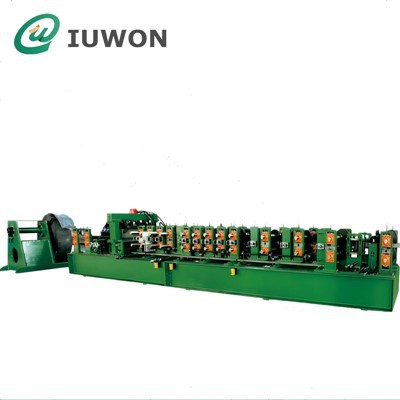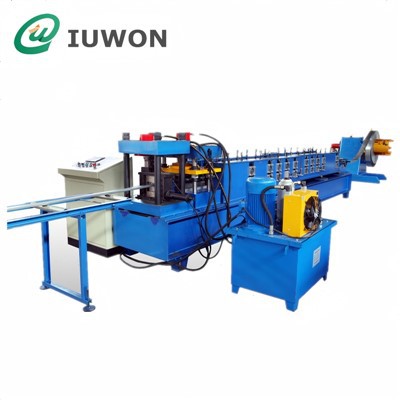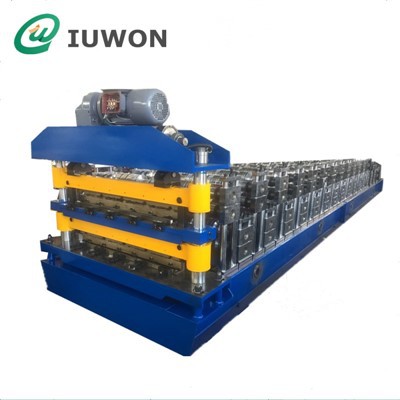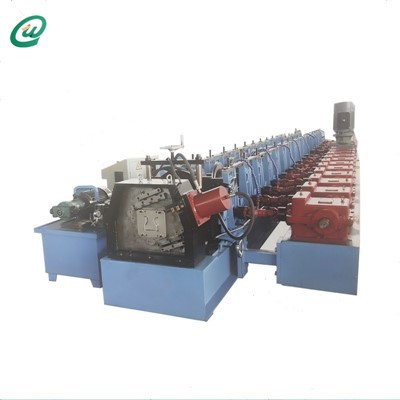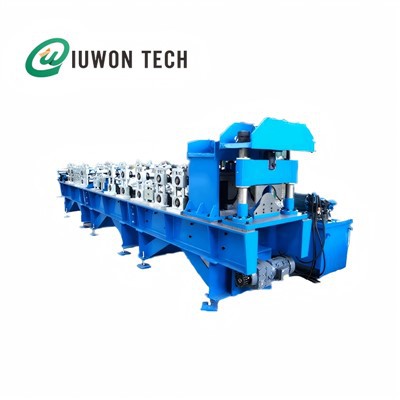
We will now continue our exploration of roll forming and the associated equipment. Since this particular forming method is widely utilized within the mechanical engineering industry, it is essential to gain a comprehensive and in-depth understanding of it in order to derive maximum benefit from this knowledge.
1. Is there a connection between cold bending and roll forming?
Although cold bending equipment and roll forming equipment are distinct types of machinery, the processes of cold bending and roll forming are, in certain respects, interrelated. Specifically, automated CNC cold bending equipment can be viewed as the CNC-automated evolution of standard roll forming equipment. In other words, it utilizes automation technology to integrate various stages-such as uncoiling, cutting, bending, and roll forming-thereby achieving the complete cold bending process.
2. Is roll forming equipment used in the production of photovoltaic (PV) mounting brackets?
The primary stages in the production of PV mounting brackets are as follows: uncoiling and leveling → servo feeding → punching → roll forming → cutting → fixed-length collection → finished product. Therefore, roll forming equipment is indeed utilized within this manufacturing sequence.
3. Regarding roll forming equipment versus extrusion equipment: are there differences in the actual processing techniques of roll forming versus extrusion?
The answer to this question is a definitive "yes"; however, from another perspective, they also share certain similarities. For instance, neither roll forming nor extrusion alters the fundamental physical properties of the material being processed. Generally speaking, if the material is relatively thin, roll forming is the preferred method; conversely, if the material is thicker, extrusion is typically employed.
4. Is roll forming equipment required during the manufacturing process of steel drums? What are the primary steps involved in manufacturing the drum body itself?
Since the production of steel drums involves a roll forming stage, roll forming equipment is undeniably required. The primary steps involved in manufacturing the drum body are as follows:
Steel sheet blanking (cutting) → punching (for openings/fittings) → roll forming → seam joining → rim pressing → drum bottom blanking (via punch press) → assembly (via rolling machine) → surface treatment → painting → finished product.