Core Principles and Logic
This process leverages the mechanical pressure generated by rotating rollers in conjunction with the plastic deformation characteristics of the material to gradually shape the material into a preset form through a series of rolling passes. Specifically, the process can be broken down into the following stages:
Force Transmission: A motor drives the rollers to rotate; as the material enters the gap between the rollers, it is subjected to both radial compressive forces and frictional forces.
Plastic Deformation: Under pressure, the material's stress exceeds its yield strength, resulting in an irreversible change in its shape.
Continuous Forming: The material feeds forward continuously as the rollers rotate; by undergoing sequential processing through multiple sets of rollers, it ultimately attains the desired cross-sectional profile.
Key Operational Elements
Roller System: The Core of Shape and Pressure Control
Roller Design:
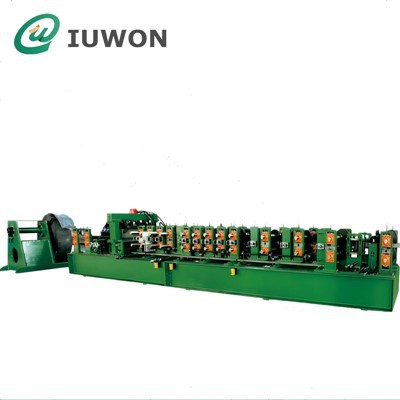
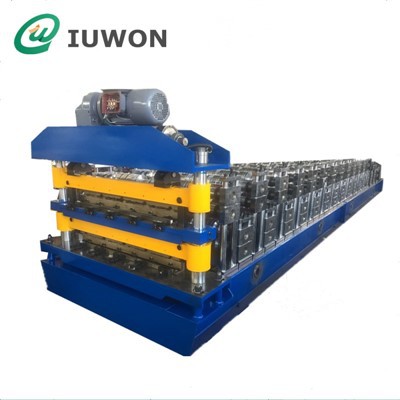
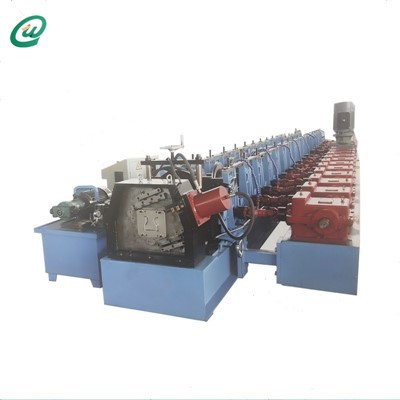
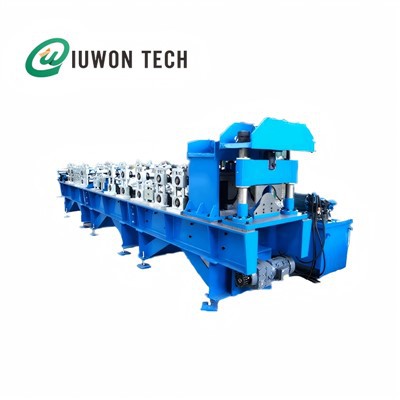
The surfaces of the rollers are designed with specific convex and concave grooves to match the target cross-sectional profile (for instance, when producing C-channel steel, the roller contours must correspond precisely to the required channel profile). Multiple sets of rollers are arranged according to the principle of "progressive forming"-earlier rollers perform the initial bending, while subsequent rollers gradually refine the dimensions and angles to achieve the final shape.
Pressure Adjustment:
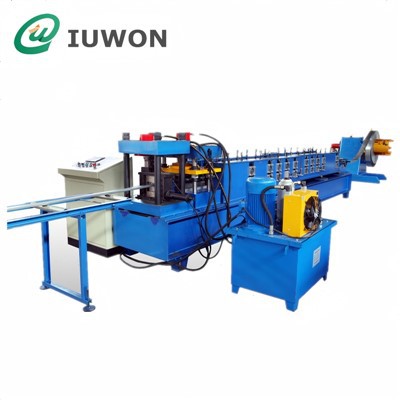
Hydraulic or mechanical mechanisms are employed to adjust the gap between the rollers, thereby controlling the magnitude of the applied pressure. Insufficient pressure results in incomplete forming, whereas excessive pressure can lead to material cracking or accelerated roller wear.
Material Feeding and Transmission System
Feeding Method:
The material (e.g., steel strips, aluminum sheets) is fed into the roller gap at a constant speed by a feeding device (such as a roller conveyor or conveyor belt). The feeding speed must be synchronized with the rotational speed of the rollers (typically ranging from 0.5 to 10 meters per minute, adjusted based on material thickness and forming complexity).
Power Transmission:
A motor drives the rollers via components such as speed reducers and gearboxes, ensuring a stable rotational speed (with a tolerance of ≤1%) to prevent dimensional deviations in the formed product caused by speed fluctuations.
Guiding and Positioning Devices Inlet Guiding:
Flared guide plates or adjustable guide rollers are utilized at the inlet to ensure the material enters the center of the roller gap with precision, thereby preventing skewing or warping.
Post-Forming Positioning:
Support rollers or straightening devices are installed at the discharge end to prevent the formed profile from undergoing deformation caused by stress release.
Step-by-Step Analysis of the Forming Process
Taking C-channel steel forming as an example, the workflow can be divided into four stages:
Initial Feeding Stage
Flat sheet material is fed by a feeding mechanism into the first set of rollers, which perform an initial press to establish the pre-bending angle for the side flanges (e.g., 15–30 degrees).
Progressive Forming Stage
The material passes sequentially through sets 2 through 8 of the rollers (depending on the required precision); each set of rollers progressively increases the flange angle (e.g., by 10–15 degrees per pass) while simultaneously controlling the height and flatness of the web (the central vertical section).
Finishing and Sizing Stage
The final set of rollers applies a precision press to the cross-section, correcting any angular errors (to within ≤1 degree), ensuring the perpendicularity of the flanges relative to the web, and simultaneously eliminating any minute surface wrinkles.
Cutting and Discharge Stage
The formed long profile is cut to the specified length by a flying shear or sawing device and then conveyed out via a conveyor belt, thereby completing the production of the finished product.
Extended Application of Principles: CNC Roll Forming Technology
Modern roll forming machines integrate Computer Numerical Control (CNC) systems to enhance the precision of the forming process through the following methods:
Real-time Parameter Adjustment: Sensors continuously monitor material thickness and temperature in real time, allowing the CNC system to automatically fine-tune the roller spacing and pressure.
Multi-axis Coordinated Control: For complex cross-sections (such as variable-section profiles), servo motors drive multiple sets of rollers to operate in coordination, thereby achieving three-dimensional forming.
Virtual Simulation and Pre-visualization: CAD/CAM software is used to simulate the entire forming process, allowing for the pre-optimization of roller arrangements and process parameters, which helps to minimize material waste associated with physical trial runs.